
STCrushers Is A Professional Minging Equipment Manufacturer since 2004, Providing High Quality Crushers, Sand Making Machines, Drying Equipment and more.
STCrushers Is A Professional Minging Equipment Manufacturer since 2004, Providing High Quality Crushers, Sand Making Machines, Drying Equipment and more.
Crusher blockage is one of the most common problems in stone crushing plants, mining operations, and aggregate production lines. Once blockage occurs, the entire system may slow down or stop, causing lower output, more downtime, and higher labor cost. In some cases, repeated blockage can also increase wear and affect equipment safety.
The good news is that crusher blockage usually has clear causes. If operators understand the most common reasons behind it, they can take practical measures to reduce the problem and improve plant stability.
One major cause of crusher blockage is oversized feed material. Every crusher is designed with a specific maximum feed size. If large stones beyond that limit enter the crushing chamber, the material may jam or move inefficiently through the machine. This is especially common when feed control is weak or when blasted material is not properly managed. A suitable feeder and proper pre-screening can help reduce this risk.
Another common reason is uneven feeding. A crusher works best when material enters the chamber steadily and uniformly. If too much material enters at once, the machine may be overloaded and the discharge flow may become unstable. If feeding is too slow or too irregular, crushing efficiency also suffers. In both cases, production becomes less stable. Installing and properly adjusting a vibrating feeder is one of the simplest and most effective ways to improve feeding conditions.
High moisture content or sticky material can also cause blockage. Wet material may stick to the crushing chamber, accumulate in the discharge opening, or build up on surrounding equipment. This is particularly problematic when the raw material contains clay, mud, or fine sticky particles. In such cases, operators may need pre-screening, cleaning, or process changes to reduce the influence of moisture and adhesion.
Incorrect discharge opening setting is another possible cause. If the discharge gap is too small, the crusher may struggle to release material smoothly, especially when the feed is difficult to process or contains too many fines. The result can be reduced throughput and a higher chance of material accumulation inside the crusher.
Worn liners or worn crushing parts can also contribute to blockage. As wear parts lose their original shape, the chamber geometry changes. Material may no longer move through the machine efficiently, and dead zones or accumulation points can develop. Regular inspection and timely replacement of wear parts help maintain smooth material flow.
Sometimes the problem is not inside the crusher itself, but in the equipment around it. For example, if the belt conveyor, screen, or downstream crusher cannot keep up, material may back up and create conditions that lead to blockage. This is why blockage should be treated as a plant-wide issue, not just a machine issue.
Poor maintenance can make blockage more frequent. If operators ignore lubrication, alignment, or routine cleaning, material movement may become less efficient and the chance of production interruptions increases. Dust build-up and neglected inspections can also contribute to unstable operation.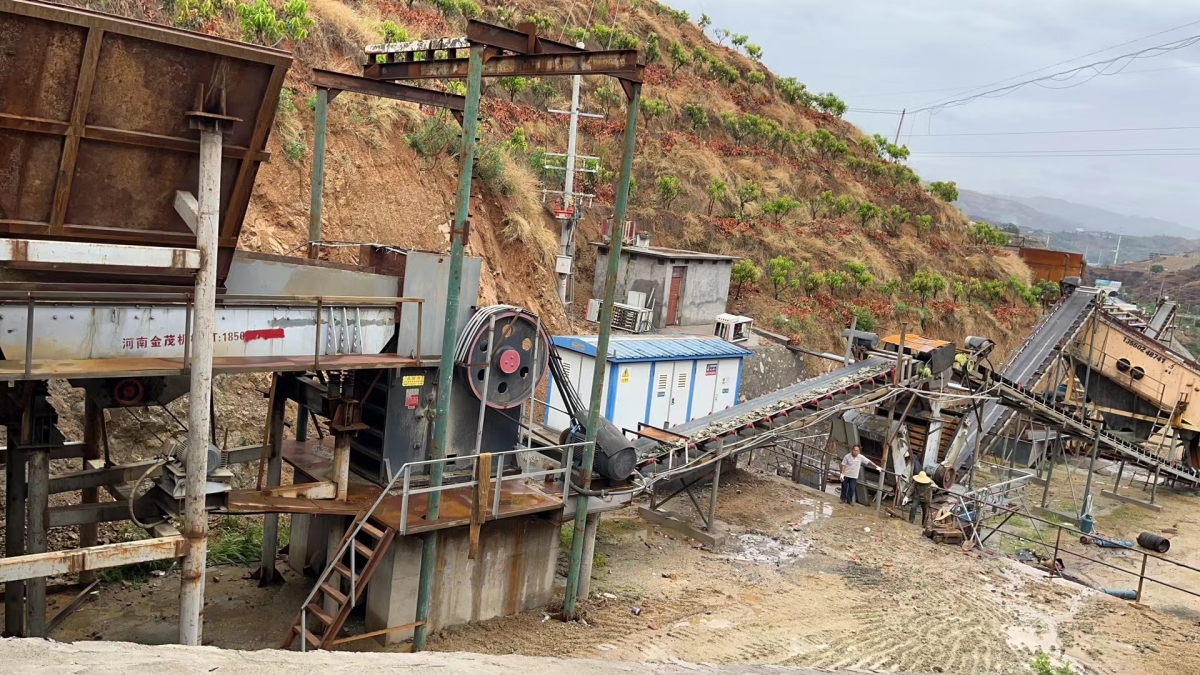
To prevent crusher blockage, plant operators can focus on the following measures:
1.Control feed size and avoid oversized material.
2.Use a proper feeder for stable and even feeding.
3.Monitor moisture and clay content in the raw material.
4.Set the discharge opening correctly.
5.Inspect wear parts regularly and replace them on time.
6.Check downstream equipment for bottlenecks.
7.Keep the crusher and surrounding area clean.
8.Follow a routine maintenance plan.
It is also useful to record the operating conditions when blockage occurs. For example, note the feed material, moisture level, production rate, and discharge setting. This helps identify recurring patterns and makes troubleshooting more effective.
In summary, crusher blockage is usually the result of mismatched feed conditions, poor machine adjustment, wear, or plant coordination problems. By improving feed control, maintenance, and system matching, most crushing plants can reduce blockage frequency and improve production efficiency.
At Sentai machinery, we help customers not only select crushing equipment but also optimize plant performance through practical operating recommendations. Preventing blockage is one of the simplest ways to reduce downtime and protect production value.
Experiencing repeated crusher blockage in your plant? Contact Sentai machinery with your material condition and machine details for practical troubleshooting suggestions.


 WhatsApp
 Email
Email
 +86 15538010601