STCrushers Is A Professional Minging Equipment Manufacturer since 2004, Providing High Quality Crushers, Sand Making Machines, Drying Equipment and more.
200 TPH Green Coke Calcination Rotary Kiln Production Line
Jan 16,2026
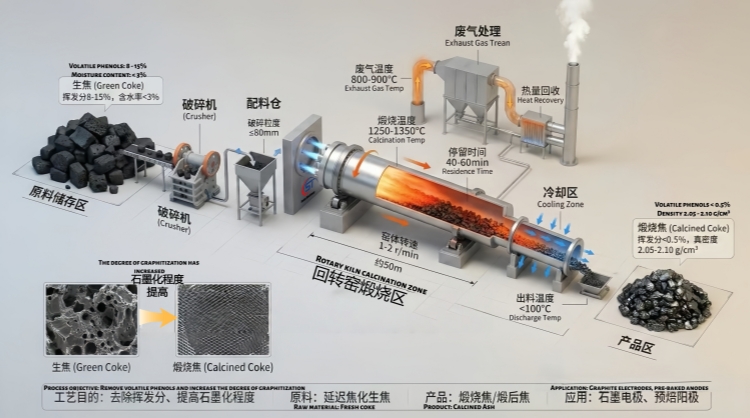
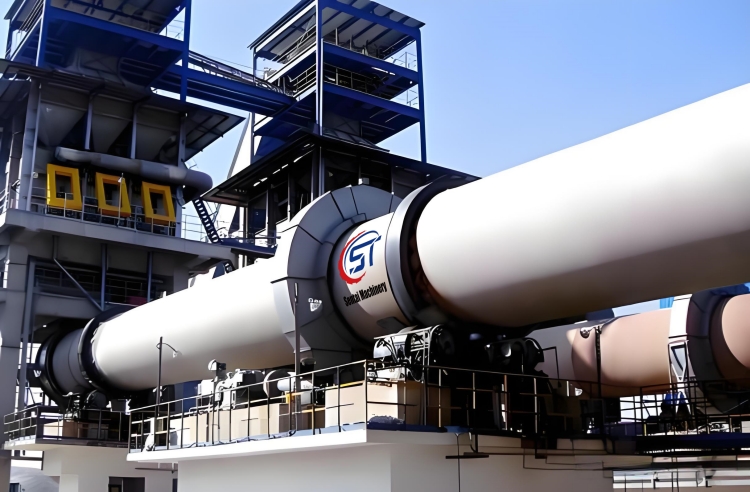
The 200 TPH Green Coke Calcination Rotary Kiln Production Line is a large-scale, energy-efficient system tailored for a Saudi Arabian petrochemical client, designed to convert green coke from delayed coking units into high-quality calcined coke for graphite electrode and pre-baked anode production. The line integrates crushing, batching, rotary kiln calcination, cooling, waste heat recovery, and exhaust gas treatment, meeting Saudi Arabia’s strict environmental standards while achieving a 99.5% volatile matter removal rate.
Equipment Used
Raw Material Silo (Volume: 500 m³, with level monitoring)
Exhaust Gas Treatment System (baghouse filter + heat exchanger, efficiency ≥99.9%)
Combustion System (natural gas burner, temperature control ±5°C)
PLC Central Control System (remote monitoring + data logging)
Belt Conveyors (heat-resistant for high-temperature zones)
Flow Description
Raw Material Feeding: Green coke (volatile matter 8-15%, moisture ≤3%) is transported from the client’s refinery to the 500 m³ raw material silo. The silo’s level sensor triggers automatic feeding to maintain continuous operation.
Crushing & Batching: Green coke is fed to the jaw crusher PE-900×1200, reducing particle size to ≤80mm. The crushed material is then conveyed to the batching hopper, which precisely controls feed rate to match the kiln’s 200 TPH capacity.
Rotary Kiln Calcination: Material enters the Φ3.6m×50m rotary kiln, where a natural gas burner maintains an internal temperature of 1250-1350°C. The kiln rotates at 1-2 RPM, ensuring a 40-60 minute residence time to remove volatile matter and increase graphitization degree.
Cooling: Calcined coke exits the kiln and enters the rotary cooler, where water jacket cooling reduces the discharge temperature to <100°C, preventing thermal degradation and ensuring safe handling.
Exhaust Gas Treatment: 800-900°C exhaust gas from the kiln passes through a heat exchanger to recover waste heat (used to preheat combustion air), reducing energy consumption by 25%. The gas is then filtered by a baghouse to remove dust, meeting Saudi Arabia’s NAMP environmental standards (emissions ≤10 mg/m³).
Product Handling: The final calcined coke (volatile matter <0.5%, true density 2.05-2.10 g/cm³) is conveyed to the product storage area, ready for shipment to the client’s graphite electrode production facility.
Supplement
The rotary kiln is lined with high-alumina refractory bricks, designed to withstand 1400°C continuous operation, with a service life of 18-24 months.
The PLC system provides real-time monitoring of kiln temperature, rotation speed, and feed rate, with automatic alarms for abnormal conditions to minimize downtime.
The line can be upgraded with a flue gas desulfurization (FGD) unit to meet stricter emission requirements, and capacity can be adjusted between 180-220 TPH by modifying kiln rotation speed and burner output.