
STCrushers Is A Professional Minging Equipment Manufacturer since 2004, Providing High Quality Crushers, Sand Making Machines, Drying Equipment and more.
STCrushers Is A Professional Minging Equipment Manufacturer since 2004, Providing High Quality Crushers, Sand Making Machines, Drying Equipment and more.
A buyer writes one sentence: Please quote one cement rotary kiln production line.
For one supplier, this may mean the rotary kiln body with drive, support rollers, sealing, and basic accessories. For another supplier, it may mean the kiln, burner, cooler, dust collector, fan, conveyors, and control interface. For the buyer, it may even mean a wider clinker production section connected with existing raw meal preparation and clinker storage.
The sentence sounds simple, but the quotation can move in three different directions. If the scope is not clear, the buyer may receive several prices that look very different. The lowest price may not be cheaper. It may simply include fewer systems.
This is why cement rotary kiln quotation should start from scope, not only from kiln diameter and length.
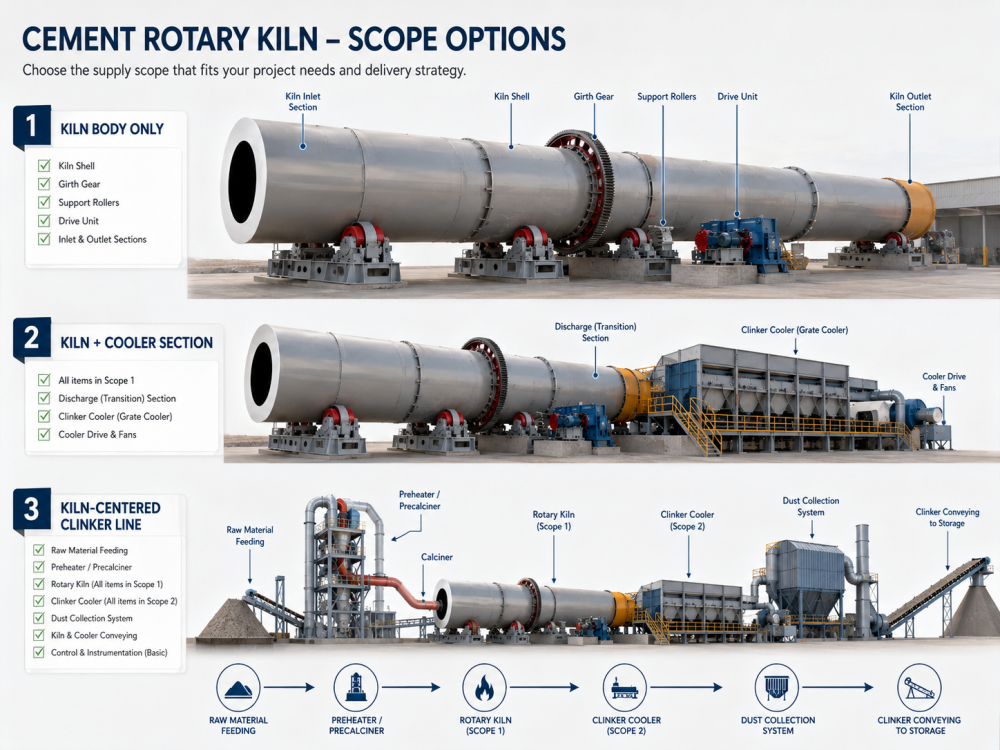
A kiln body only quotation is suitable when the buyer already has most of the surrounding system. This may happen in a replacement project, expansion project, or workshop where feeding, burner, cooler, dust collection, conveying, and control systems are already available or supplied by another contractor.
In this case, the supplier may quote the kiln shell, riding rings, support rollers, thrust roller, drive system, gear system, inlet and outlet sealing, and basic lubrication or safety parts. The quotation may not include burner, cooler, dust collector, foundation, installation materials, or electrical control cabinet unless they are written clearly.
This scope can be practical, but it needs accurate interface information. The supplier must know the existing foundation, installation position, inlet height, outlet height, drive side, heat source interface, and discharge connection.
If these details are missing, a kiln body quotation may be fast, but not safe enough for real installation.
Many cement clinker projects need more than the kiln body. The cooler is closely connected with discharge temperature, clinker handling, heat recovery, and downstream conveying.
A kiln and cooler section quotation may include the rotary kiln, burner system, kiln sealing, support system, drive system, cooler, discharge conveyor, and basic connection between kiln outlet and cooler inlet. Dust collection may or may not be included, depending on the supplier proposal.
This scope is more complete than buying only the kiln body, but it is still not the same as a complete clinker line. The buyer must check whether feeding system, preheating section, induced draft fan, dust collector, ducting, control system, installation guidance, spare parts, and technical documents are included.
The cooler is not an optional detail. If the cooler is not matched with kiln output and clinker discharge temperature, the project may face unstable conveying, heat loss, dust issues, or poor downstream handling.
A kiln-centered clinker line is a wider supply scope. It does not always mean a full cement factory, but it usually covers the main kiln section and key supporting systems around clinker production.
This scope may include feeding device, sealing system, rotary kiln, burner, cooler, dust collector, induced draft fan, ducting, conveyors, storage connection, electrical control interface, installation guidance, and commissioning support. Some projects may also include raw meal preparation or clinker grinding, but those should be listed separately because they can change the project scale greatly.
For buyers, this scope is easier to compare only when every included system is written in the quotation. A line quotation without a clear equipment list is not detailed enough.
Scope item | Kiln body only | Kiln and cooler section | Kiln-centered clinker line |
Rotary kiln shell and drive | Usually included | Included | Included |
Burner system | Often excluded | Usually included or optional | Usually included |
Cooler | Excluded | Included | Included |
Feeding and sealing system | Often excluded | Optional | Usually included |
Dust collector and fan | Excluded or optional | Optional | Usually included |
Conveying and storage connection | Excluded | Optional | Usually included |
Electrical control | Basic or excluded | Optional | Usually included |
Installation guidance | Optional | Optional | Usually included in project proposal |
This table is not a fixed rule. It is a way to check the quotation boundary. The final scope must be confirmed item by item.
Two cement rotary kiln quotations can use the same kiln size but cover different things.
One price may include only the kiln body. Another may include the kiln, cooler, burner, dust collector, fan, and control cabinet. A third may include site guidance, spare parts, technical documents, and commissioning support.
If the buyer compares only the total price, the result can be misleading. The lower price may leave many systems for later purchase. After adding missing equipment, freight, installation materials, electrical parts, and support services, the final project cost may become higher than expected.
A useful comparison should mark included and excluded items line by line. The question is not only how much the kiln costs. The question is what the quotation can actually deliver on site.
Before asking for a cement rotary kiln quotation, the buyer should mark the project boundary clearly.
1. Is this a replacement kiln, an expansion section, or a new clinker line?
2. Do you need only the kiln body, or kiln plus cooler?
3. Is the burner included in the supplier scope?
4. Who supplies the feeding system, sealing system, cooler, dust collector, fan, ducting, and conveyors?
5. Is the electrical control cabinet included?
6. Are foundation drawings, installation drawings, and operation documents included?
7. Is on-site installation guidance or online technical support required?
8. What systems already exist at the plant?
These answers help the supplier quote the correct scope instead of guessing.
Replacement and upgrading projects are usually more sensitive to interface details than new projects.
The buyer may already have civil foundation, feeding equipment, kiln inlet chamber, cooler, dust collector, or control system. In this case, the new kiln must match the existing layout. Even a suitable kiln model can create problems if inlet height, outlet height, rotation direction, drive position, foundation spacing, or connection dimensions are not checked.
For an existing cement plant, photos and drawings are more valuable than a short message. A clear site layout can prevent wrong assumptions in quotation.
A quotation needs further checking if it only gives kiln size and price without an equipment list. It also needs checking if it says complete line but does not list cooler, dust collection, fan, control system, conveying, or service scope.
Another red flag is unclear wording such as standard accessories included. Different suppliers may define standard accessories differently. For cement rotary kiln projects, vague wording can hide large scope differences.
A better quotation should show the main equipment list, technical parameters, included services, excluded items, delivery scope, and basic project assumptions.
Cement rotary kiln selection should not start from price comparison alone. Before the buyer compares kiln models, the supply boundary must be clear.
A kiln body only quotation, a kiln and cooler section quotation, and a kiln-centered clinker line quotation are different project scopes. They should not be compared as if they are the same offer.
For buyers, the practical first step is to define what is included, what is excluded, and what must connect with existing systems. Once the scope is clear, kiln model selection and price comparison become more meaningful.
If you are planning a cement rotary kiln project, Sentai Machinery can help review your required supply scope, existing equipment, raw meal condition, clinker output target, cooler requirement, dust collection needs, site layout, and installation support requirement.
Share your project type, kiln capacity target, existing plant photos or drawings, and expected equipment scope. Our team can help prepare a clearer cement rotary kiln quotation based on your actual project boundary.
1. What Is a Rotary Kiln and How Does It Work
2. Why Rotary Kiln Output Is Not Only Decided by Kiln Size
3. What Affects Calcined Product Quality in a Rotary Kiln
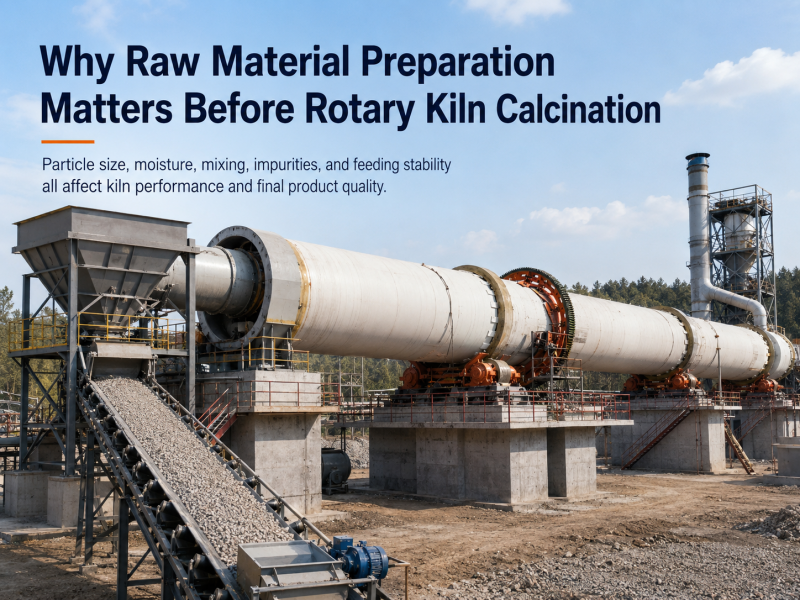
4. Why Raw Material Preparation Matters Before Rotary Kiln Calcination
5. Bauxite Rotary Kiln Production Plant: From Raw Material Data to Equipment Selection
 WhatsApp
 Email
Email
 +86 15538010601