
STCrushers Is A Professional Minging Equipment Manufacturer since 2004, Providing High Quality Crushers, Sand Making Machines, Drying Equipment and more.
STCrushers Is A Professional Minging Equipment Manufacturer since 2004, Providing High Quality Crushers, Sand Making Machines, Drying Equipment and more.
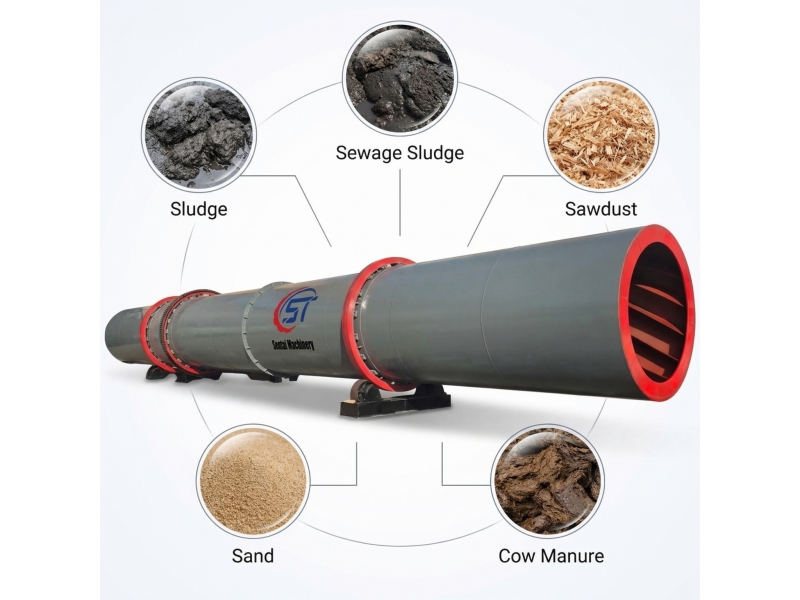
A rotary drum dryer is widely used in industrial drying processes for materials such as sand, sludge, sawdust, mineral powder, biomass, and agricultural residues. But selecting the right dryer is not as simple as choosing a drum size. The drying result depends on the material characteristics, moisture level, required capacity, heat source, and plant layout.
If the dryer is not properly selected, the user may face low thermal efficiency, high fuel consumption, unstable moisture content, and maintenance difficulties. A correct selection can improve productivity, reduce operating cost, and provide more stable final product quality.
The first thing to consider is material type. Different materials behave very differently inside a dryer. Sand flows relatively well, while sludge can be sticky and difficult to handle. Sawdust is lighter and may require special airflow and dust control considerations. Mineral powder needs careful drying to avoid excessive dust loss. This is why the same dryer structure may not suit every material equally well.
The second major factor is initial moisture content and final moisture target. Buyers should clearly know how wet the material is before drying and what moisture level is required after drying. A material with 25% moisture requires a different drying effort from one with 70% moisture. The greater the moisture difference, the more important the dryer design, heat source, and residence time become.
The third point is capacity requirement. Capacity is often expressed in tons per hour or tons per day, but it should be discussed together with moisture content. Drying 20 tons per hour of material at moderate moisture is very different from drying 20 tons per hour of highly wet material. Capacity selection should therefore be based on actual wet feed conditions, not only dry output.
Another key factor is heat source. Rotary dryers can use coal, gas, diesel, biomass, and other fuels depending on the project. The choice depends on local energy cost, environmental policy, site conditions, and customer preference. A good dryer solution should match the available heat source and use it efficiently.
Buyers should also consider the material feeding and discharge characteristics. Sticky or uneven materials may need special feeding arrangements to avoid blockage. Light materials may need a different internal lifting structure from heavier materials. The dryer’s internal design plays a major role in heat exchange efficiency and drying uniformity.
The final application of the dried material also matters. If the product is used in construction materials, fuel pellets, mineral processing, or reuse applications, the moisture tolerance may differ. Some industries require stricter final moisture consistency than others. This should be considered before selecting the dryer model.
A complete drying system usually includes more than the drum itself. It may also involve: - Heat source system - Feeding device - Discharge device - Dust collection unit - Induced draft fan - Cyclone separator - Electrical control system - Conveyors or storage units
When choosing a rotary drum dryer, buyers should ask the following questions: - What material needs to be dried? - What is the initial moisture content? - What is the target final moisture? - What is the hourly or daily capacity? - What heat source is available? - Is the material sticky, dusty, or light? - What are the local environmental or space limitations?
It is also important to think about energy efficiency and maintenance. A cheaper dryer may look attractive at the beginning, but if it consumes too much fuel or creates frequent downtime, the long-term cost may be much higher. Strong sealing, good thermal design, and convenient maintenance access all contribute to better economic performance.
In summary, choosing a rotary drum dryer means matching the machine to the material, moisture, capacity, and fuel conditions. There is no single standard solution for every project. A successful drying system is always based on actual working data.
At Sentai machinery, we provide rotary drum drying solutions for a wide range of industrial materials. With the right technical data, we can help customers select a dryer system that supports stable operation and practical return on investment.
Need help choosing a rotary drum dryer? Send Sentai machinery your material type, moisture level, capacity, and fuel condition for a customized drying recommendation.
Related Articles:
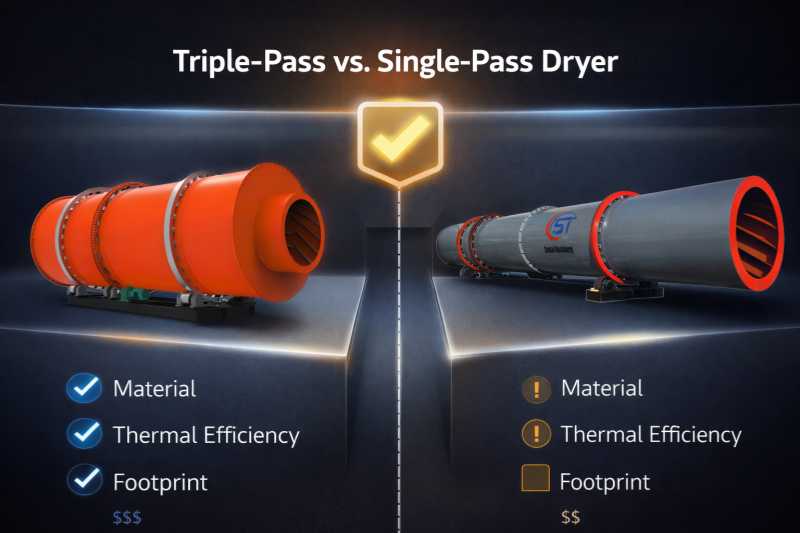
Single Drum Dryer vs Three Cylinder Sand Dryer: Which One Is Better?
Three-Drum Vs. Single-Drum Dryers: A Guide To Applications And Material Suitability


 WhatsApp
 Email
Email
 +86 15538010601