
STCrushers Is A Professional Minging Equipment Manufacturer since 2004, Providing High Quality Crushers, Sand Making Machines, Drying Equipment and more.
STCrushers Is A Professional Minging Equipment Manufacturer since 2004, Providing High Quality Crushers, Sand Making Machines, Drying Equipment and more.
A sand making machine may run normally until the discharge becomes coarser, output begins to fall, abnormal sound develops, or the motor load changes. The operator must then stop feeding, empty the machine, isolate the power, inspect the crushing chamber, and determine the required work.
This is where a hydraulic open-box structure has practical value. It improves access to the internal working area and reduces some disassembly before inspection. However, easy access does not remove wear or correct an unsuitable process. The machine must still match the material, feed size, product target, operating hours, and site conditions.
The hydraulic system changes how the machine body is opened for internal inspection and service. After shutdown, material clearing, and energy isolation, the opening structure can provide more direct access to wear areas and accumulated material.
1. Inspecting internal wear.
2. Cleaning material buildup.
3. Checking fastening and protective parts.
4. Replacing worn components.
5. Finding damage before it affects nearby parts.
6. Completing a final inspection before restart.
The structure reduces access difficulty, not the complete maintenance workload. Tools, spare parts, lifting arrangements, trained personnel, and a controlled restart are still required.
Opening the body is not the first step. Operators normally identify a change in performance first. Typical signals include unstable discharge size, lower capacity, abnormal vibration, unusual noise, changing motor load, increased oversize, or a planned inspection interval.
Before opening, feeding should stop and remaining material should leave the chamber. Power and other energy sources must be isolated according to site procedures. Rotating parts must stop completely, and the working area should be checked before maintenance begins.
Hydraulic opening does not change the abrasiveness of the stone. Actual wear depends on hardness, abrasiveness, feed size, impurities, operating hours, and reduction duty.
Oversized feed can create stronger impact and uneven loading. A fluctuating feed rate can alternate between overload and underload. Wet and sticky material may accumulate inside the machine and require more frequent cleaning.
Easier access allows internal conditions to be checked more regularly, but it does not guarantee a fixed wear-part life. Inspection frequency should change when the raw material source or operating conditions change.
Rated capacity describes processing while the machine operates under suitable conditions. Monthly production also depends on time used for inspection, cleaning, adjustment, replacement, and unexpected faults.
When access is difficult, inspection may be postponed until the product changes significantly or the machine stops. Delayed maintenance can allow worn parts to affect discharge size, vibration, load, and nearby components.
A hydraulic open-box design can make planned inspection more practical. It helps the team identify the work scope, prepare the correct parts, and return the machine to service in a controlled way.
The opening method is only one factor. Total shutdown time also depends on:
1. Whether material has been fully cleared.
2. The position and extent of wear.
3. Spare-part availability.
4. Tool and lifting preparation.
5. Space around the machine.
6. Maintenance experience.
7. Additional damage found during inspection.
8. Final checks and trial operation.
A machine that opens quickly can still remain stopped when the required part is unavailable or surrounding platforms block access.
Layout drawings should not use only the closed machine dimensions. The opening direction, safe working area, and route for moving worn parts must also be considered.
Conveyors, walkways, platforms, guards, columns, and electrical cabinets should not obstruct the opening range. When lifting is required, the site must provide suitable height, access, and support.
These details are easier to solve during layout design than after installation.
A hydraulic open-box sand making machine can be considered for manufactured sand and fine crushing involving limestone, bluestone, and similar materials when the product target and reduction duty match the machine.
It may suit projects that value direct internal access, regular wear inspection, and a straightforward maintenance process. It requires more careful evaluation when the feed is highly abrasive, very hard, wet and sticky, or strongly variable in size.
Particle-shape requirements also matter. Projects with strict shaping demand, hard rock, or river stone may need to compare this route with a VSI sand making machine. The decision should consider grading, shape, wear cost, feed control, and maintenance conditions.
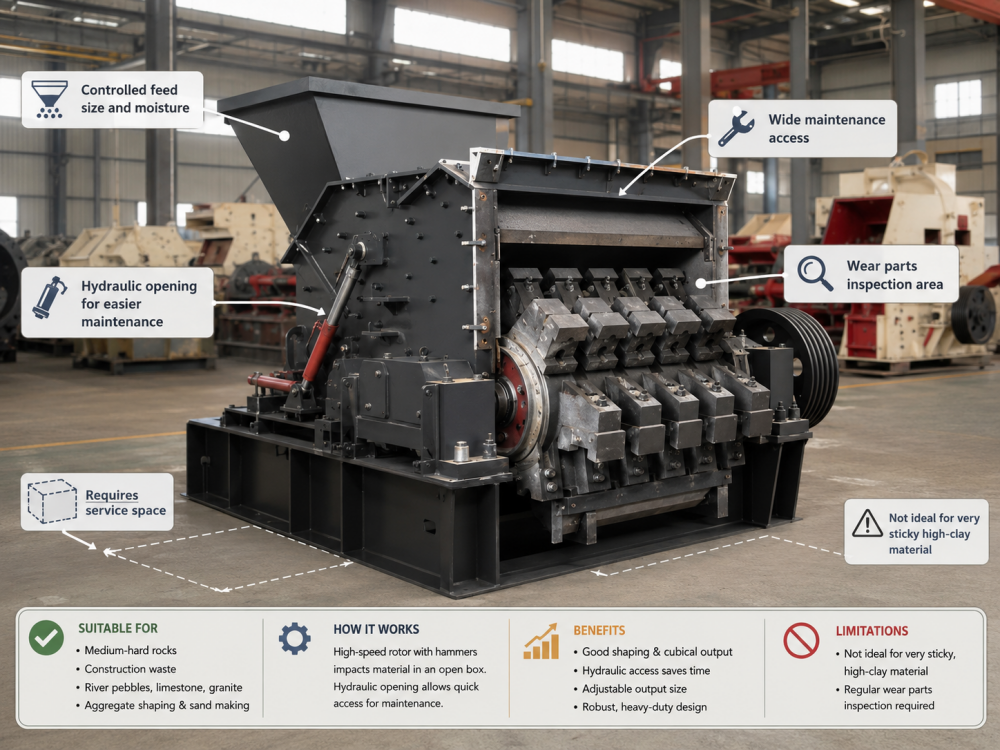
The two machines serve different priorities. The hydraulic open-box option emphasizes direct crushing or sand making duty and easier internal access. A VSI is commonly considered when shaping and controlled manufactured sand production are central requirements.
Neither machine corrects poor feed preparation. Excessive feed size, uneven feeding, unstable return load, wet clay, or inefficient screening can reduce the performance of either route. The selected machine still needs suitable upstream crushing and feeding, plus downstream screening.
Opening the body can reveal wear and accumulation, but it cannot solve process problems outside the chamber.
If the feeder delivers material unevenly, load remains unstable. If the upstream crusher allows oversized stone to pass, impact conditions change. If the screen is blocked or undersized, unsuitable particles may return or enter the final product. Wet clay may make cleaning more frequent even when access is convenient.
Maintenance design and process design should be reviewed together. Stable feeding, controlled feed size, suitable screening, and a realistic product target reduce unnecessary internal stress.
Site condition | Possible effect | Planning response |
Abrasive raw material | Faster internal wear | Confirm wear parts and inspection frequency |
Unstable feed size | Changing impact load | Improve upstream crushing and screening |
Limited service space | Difficult opening and replacement | Reserve access during layout design |
No critical spare parts | Longer shutdown | Prepare wear parts before operation |
Strict grain shape target | Access alone is insufficient | Compare with a VSI shaping route |
Wet and sticky feed | Accumulation and unstable feeding | Review moisture and process suitability |
1. Raw material hardness and abrasiveness.
2. Maximum and typical feed size.
3. Required discharge size and particle shape.
4. Capacity and daily operating hours.
5. Available service space and opening direction.
6. Maintenance platform and lifting tools.
7. Spare-part storage and local service capability.
8. Upstream crusher and feeder.
9. Downstream vibrating screen and return arrangement.
10. Moisture, clay, powder, and grading requirements.
The hydraulic open-box structure can make inspection, cleaning, and wear-part service more direct. This supports planned maintenance and reduces unnecessary disassembly.
Its value still depends on correct selection. It does not eliminate wear, compensate for oversized feed, or replace stable feeding and screening. Material, product requirements, operating time, spare parts, maintenance space, and the complete sand making process must be evaluated together.
Sentai Machinery can review the material, feed size, required sand size, capacity, operating hours, site layout, maintenance conditions, and particle-shape target before recommending a configuration.
1. VSI Sand Making Machine Feed Control: Why Gradation and Moisture Change Sand Shape
2. Why Finished Sand Quality Depends on More Than the Sand Maker
3. Why Is There Too Much Stone Powder in Manufactured Sand
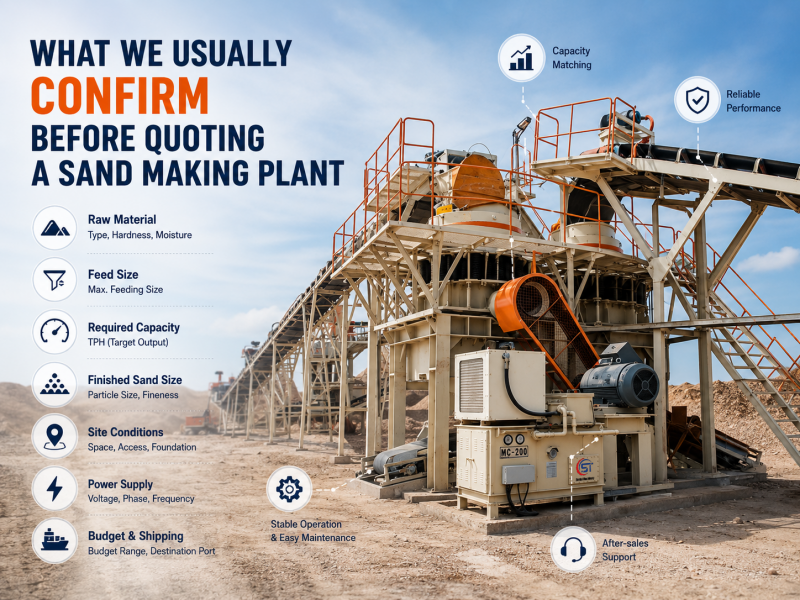
4. How to Choose Equipment for a Sand Making Plant
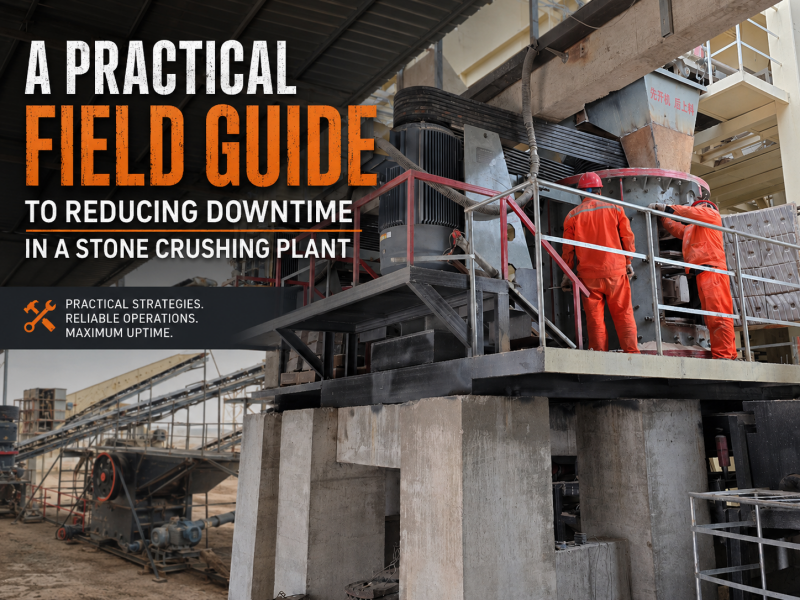
5. A Practical Field Guide to Reducing Downtime in a Stone Crushing Plant
1. Hydraulic Open-box Sand Making Machine


 WhatsApp
 Email
Email
 +86 15538010601