
STCrushers Is A Professional Minging Equipment Manufacturer since 2004, Providing High Quality Crushers, Sand Making Machines, Drying Equipment and more.
STCrushers Is A Professional Minging Equipment Manufacturer since 2004, Providing High Quality Crushers, Sand Making Machines, Drying Equipment and more.
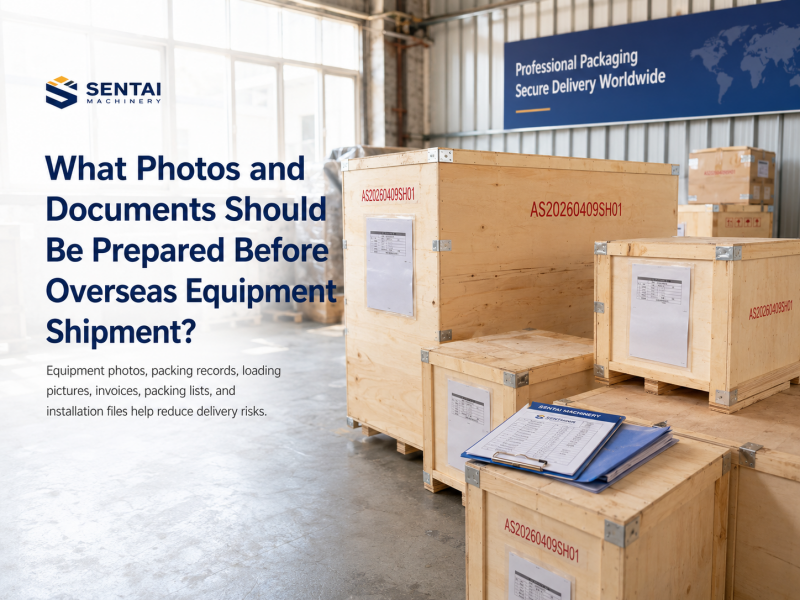
For overseas equipment buyers, shipment is not just the final step before delivery. It is also the point where many future problems can be prevented.
Once a crusher, rotary dryer, rotary kiln, ball mill, vibrating screen, or complete production line leaves the factory, it becomes much harder to check details, replace missing parts, or confirm packaging conditions. If photos and documents are not prepared clearly before shipment, the buyer may face problems during customs clearance, unloading, installation, or later spare parts identification.
This is why Sentai Machinery treats pre-shipment records as part of the equipment delivery process. A good shipment record helps both the supplier and the buyer confirm what has been produced, how it has been packed, what has been loaded, and what documents are needed for the next step.
For industrial machinery, these records are not only for proof. They are also useful working files for the buyer's purchasing team, customs agent, site engineer, and installation team.
Many buyers start asking for detailed photos and documents only when the container is already loaded or close to departure. At that moment, some details may already be difficult to check.
For example, if the buyer wants to confirm the motor nameplate, spare parts package, reducer model, foundation drawing, or loading position after shipment, the equipment may already be sealed inside the container. If the record is incomplete, the supplier and buyer may spend more time searching, explaining, or confirming by memory.
This is especially risky for heavy machinery projects. A complete production line may include many machines, motors, belts, guards, small parts, bolts, tools, and spare parts. If these items are not recorded properly, the buyer may not know which part belongs to which machine after arrival.
A better method is to prepare shipment evidence before the goods leave the factory.
Before shipment, the buyer should ask for clear photos of the main equipment. These photos help confirm that the equipment has been produced according to the agreed configuration.
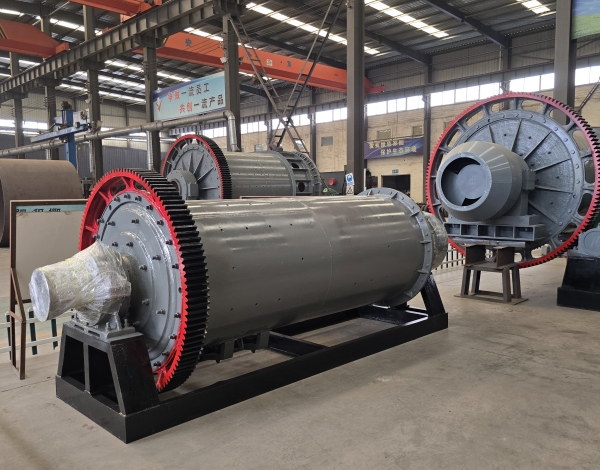
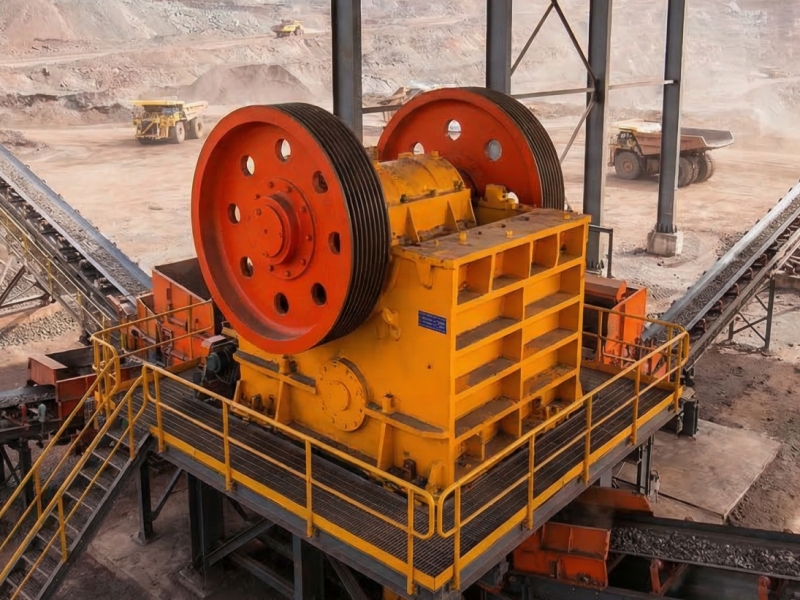
For single machines, useful photos may include the full machine appearance, feed opening, discharge area, motor and reducer, guards, support frame, nameplate, control cabinet, and spare parts.
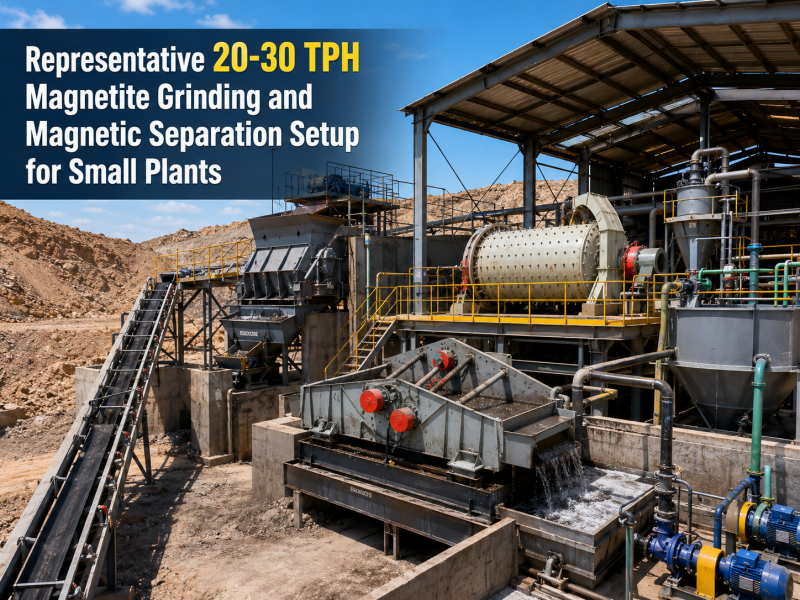
For a complete production line, photos should also show how different machines are matched. For example, a stone crushing plant may include jaw crusher, impact crusher or hammer crusher, vibrating screen, belt conveyors, and supporting structures. An ore processing plant may include ball mill, spiral classifier, flotation machine, magnetic separator, and related parts.
The goal is not to take beautiful marketing photos. The goal is to make the equipment condition clear before delivery.
Packing photos are very useful for overseas buyers because they show how the equipment is protected before long-distance transport.
For heavy machinery, different parts may need different packing methods. Some large steel parts may be loaded directly. Motors, electrical parts, bearings, reducers, and small spare parts may need wooden cases or stronger protection. Painted surfaces, machined parts, and fragile components may need extra care.
Loading photos are also important. They can show which items were loaded into each container, how large parts were positioned, and whether small boxes were included. For the buyer, these photos help during unloading and checking at the destination port or project site.
A clear loading record can reduce disputes such as missing parts, mixed packages, or unclear container allocation.
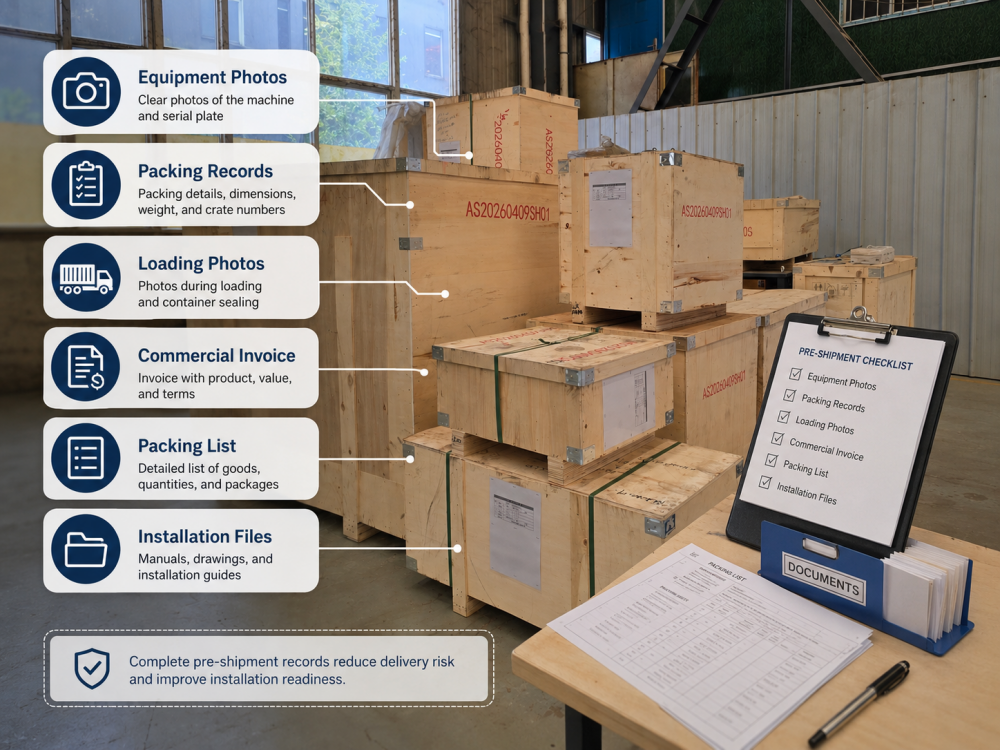
Besides photos, several commercial documents should be checked before shipment.
Document | Why It Matters |
Commercial invoice | Used for payment record and customs clearance |
Packing list | Shows equipment names, quantity, package numbers, weight, and volume |
Bill of lading draft | Confirms shipper, consignee, notify party, port, and cargo description |
Contract or proforma invoice | Helps confirm the agreed equipment scope |
Certificate if required | May be needed for some markets or buyer procedures |
Insurance document if applicable | Useful when shipment terms require insurance support |
For industrial equipment, commercial documents are not enough. The buyer also needs technical documents for site preparation and installation.
These may include foundation drawings, layout drawings, electrical information, motor details, installation notes, and equipment manuals. For complete lines, a general process layout is also helpful because it helps the site team understand the relationship between machines.
For example, before installing a rotary dryer, the buyer may need to prepare foundation, feed conveyor position, discharge conveyor position, duct connection, dust collection area, and heat source arrangement. Before installing a ball mill, the buyer may need to check foundation size, motor position, reducer position, liner installation, and feeding and discharge connection.
If these documents are prepared too late, the site may not be ready when the equipment arrives.
Small items can create big trouble if they are not recorded clearly.
Bolts, belts, screen mesh, liners, electrical parts, sensors, tools, and spare parts may not look important during shipment, but they can affect installation and operation. If these parts are packed in a wooden case without clear photos or labels, the buyer may not know what is inside until the case is opened.
A simple spare parts photo record can help the buyer confirm what has been supplied. Package labels and item lists are also useful, especially when several machines are shipped together.
For complete production lines, Sentai Machinery usually recommends checking small parts before loading and keeping photo records for later reference.
Before overseas equipment shipment, buyers can confirm the following items:
1. Full equipment photos have been provided.
2. Main machine nameplates are clear.
3. Motors, reducers, and electrical parts have been photographed.
4. Spare parts and small packages have been recorded.
5. Wooden cases and protective packing have been photographed.
6. Container loading photos are available.
7. Commercial invoice and packing list have been checked.
8. Bill of lading information has been confirmed.
9. Foundation drawings and layout drawings are ready if needed.
10. Installation manuals or notes have been prepared.
For overseas machinery projects, good shipment preparation is part of professional delivery.
Photos and documents cannot replace equipment quality, but they help prove the equipment scope, protect both sides, support customs clearance, and make site installation easier. They also reduce unnecessary misunderstanding after the goods arrive.
Before equipment leaves the factory, the buyer should not only ask whether the machine is ready. A better question is whether the shipment record is ready.
For crushers, rotary dryers, rotary kilns, ball mills, vibrating screens, and complete production lines, clear photos and complete documents can make overseas delivery much smoother.
If you are preparing an overseas equipment order, Sentai Machinery can help provide pre-shipment photos, packing records, loading references, and necessary technical documents according to your project requirements.
Send us your equipment list, destination port, shipment terms, and site preparation needs. Our team can help you confirm the shipment details before delivery.
1. How to Ship a Ball Mill Overseas: Container Loading and Packing Tips
2. How to Reduce Spare Parts Confusion Before Overseas Equipment Delivery
3. How We Check a Rotary Dryer Before Shipment
4. What We Usually Confirm Before Quoting a Sand Making Plant



 WhatsApp
 Email
Email
 +86 15538010601