
STCrushers Is A Professional Minging Equipment Manufacturer since 2004, Providing High Quality Crushers, Sand Making Machines, Drying Equipment and more.
STCrushers Is A Professional Minging Equipment Manufacturer since 2004, Providing High Quality Crushers, Sand Making Machines, Drying Equipment and more.
A Flotation Problem Does Not Always Start in the Flotation Cells
A flotation circuit may look unstable, but the real cause does not always begin in the flotation machines.
In many mineral processing plants, the first visible sign of trouble appears in flotation:
recovery starts moving up and down
froth behavior becomes inconsistent
concentrate grade drifts
operators keep adjusting reagents but results still feel unstable
At that moment, many teams naturally focus on the flotation section first.
That is understandable. Flotation is where the problem becomes visible.
But in many cases, the instability begins earlier, in the grinding circuit.
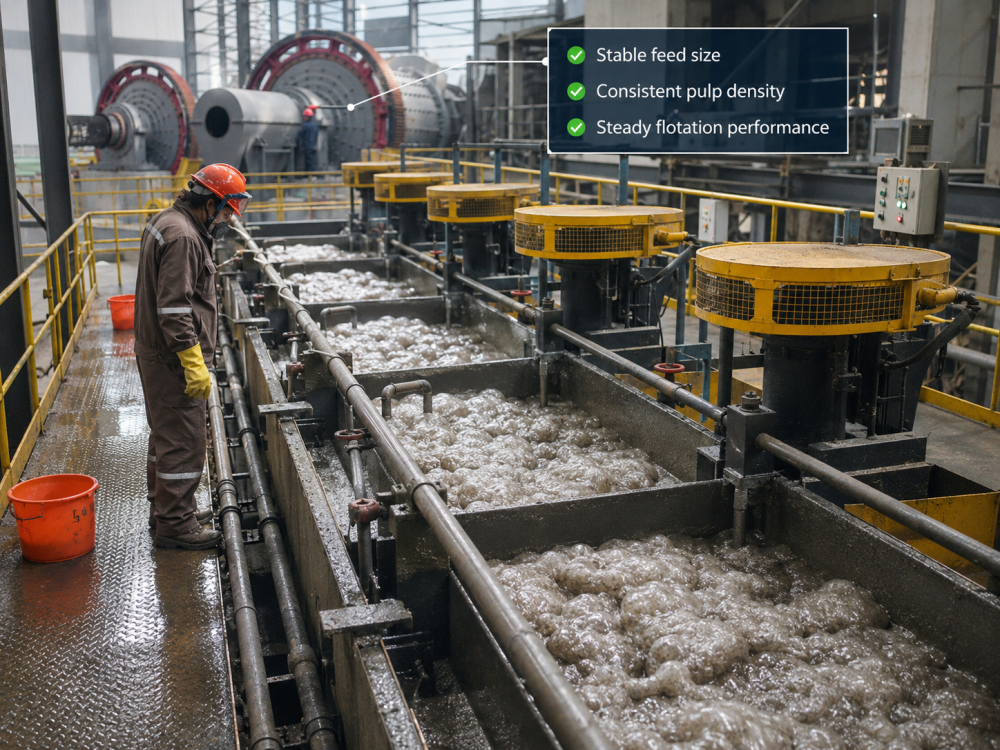
If grinding fineness, classifier performance, or slurry feed condition keeps changing, flotation performance becomes harder to control. A flotation machine cannot give stable results if the material entering it is unstable from the beginning.
Quick Answer
Stable flotation usually depends on stable grinding.
If the grinding circuit keeps sending flotation feed with changing particle size, changing liberation condition, or changing slurry consistency, flotation performance often becomes unstable even when the flotation machine itself is working normally.
That is why some flotation problems are not really flotation problems. They are upstream stability problems.
Why Flotation Gets Blamed Too Easily
There is a simple reason for this.
The flotation section is where plant teams can see the result directly:
froth changes
grade changes
recovery changes
concentrate appearance changes
Grinding instability is less visible unless the team is already watching:
mill discharge fineness
classifier overflow consistency
circulating load behavior
slurry density trends
So when performance drops, flotation is often blamed first because it is the place where the symptom shows up most clearly.
But a flotation circuit is not working with raw ore. It is working with whatever the grinding circuit sends to it.
If that feed keeps changing, flotation becomes reactive instead of stable.
What Grinding Stability Actually Affects
Grinding stability affects flotation in several direct ways.
1. Liberation consistency
If grinding is unstable, mineral liberation becomes unstable. Some ore particles may be too coarse and still locked with gangue, while others may be over-ground into excessive fines.
2. Particle size distribution
Flotation performance often depends on a usable and reasonably consistent particle size range. If the feed size distribution keeps shifting, flotation response also shifts.
3. Reagent response
Reagents do not work in a vacuum. Their effect changes with slurry condition and particle behavior. If grinding results fluctuate, reagent performance becomes harder to predict.
4. Froth behavior
Unstable grinding can change how particles attach to bubbles, how much gangue enters the froth, and how stable the froth appears.
5. Recovery and grade consistency
Even if average plant performance looks acceptable over time, unstable grinding may still make daily or shift-based flotation performance much harder to control.
1. Unstable Fineness Changes Mineral Liberation
This is one of the most important links between grinding and flotation.
If the ore is under-ground, valuable minerals may remain locked. That means flotation cannot recover them efficiently, no matter how hard the operators try to adjust the flotation section.
If the ore is over-ground, the plant may create excessive slime, which can also hurt flotation selectivity and recovery.
The problem becomes worse when the fineness keeps moving back and forth instead of staying within a controlled range.
What this means in practice
The plant may not have a bad flotation machine. It may have a flotation circuit receiving inconsistent liberation conditions.
2. Particle Size Fluctuation Changes Reagent Response
Reagent programs are usually tuned around certain feed conditions.
If the grinding circuit keeps changing the flotation feed size distribution, the same reagent dosage may behave differently from one shift to another.
That means:
a dosage that looked correct yesterday may feel weak today
froth may look too active or too flat without an obvious explanation
selectivity may become less reliable
This is one reason why reagent adjustment alone does not always solve flotation instability.
The reagent may not be the primary problem. The feed condition may be moving underneath it.
3. Classifier Instability Causes Uneven Flotation Feed
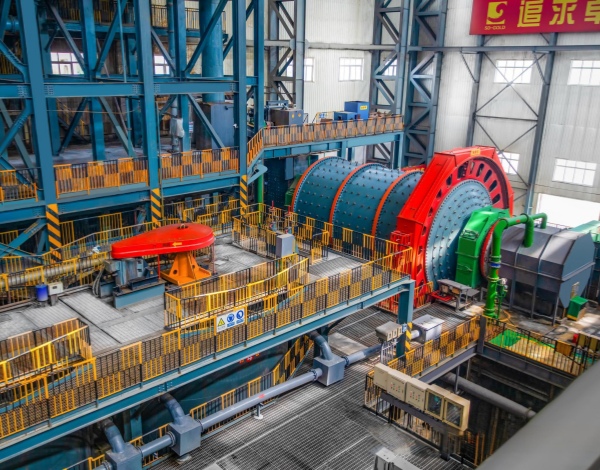
The grinding circuit is not only about the ball mill. The classifier is also critical.
If classification is unstable, the flotation section may receive feed that changes in fineness, solids distribution, circulating load pressure, and slurry behavior.
That can make flotation performance unstable even if the flotation cells themselves are mechanically sound.
What often happens
Operators keep trying to improve flotation from the flotation side, while the real problem is that the classifier is not giving a stable product to begin with.
4. Over-Grinding or Under-Grinding Hurts Selectivity
This point is closely related to liberation, but it deserves separate attention.
A stable flotation circuit usually needs a grinding target that is not only fine enough, but also consistently appropriate.
If the circuit drifts into under-grinding:
liberation suffers
recovery may drop
If it drifts into over-grinding:
slime problems may rise
selectivity may weaken
concentrate quality may become harder to hold
This is why grinding stability is not only about hitting a number once. It is about staying close to the right grinding condition over time.
5. Grinding Instability Makes Plant Control Reactive Instead of Stable
When grinding is unstable, the whole plant starts chasing symptoms.
The flotation team sees froth changes and adjusts reagents. Then feed changes again. Then slurry condition changes. Then recovery moves again.
Now the plant is reacting all day long, but not controlling the root cause.
This creates two problems:
performance becomes harder to stabilize
the team may lose confidence in which section is truly responsible
A plant that spends too much time reacting often has an upstream stability issue.
Quick Diagnosis Table
Grinding Problem | What It Causes in Flotation | What to Check First |
Fineness fluctuates too much | Recovery and grade become unstable | Check mill discharge trend |
Under-grinding | Valuable minerals remain locked | Check liberation and classifier performance |
Over-grinding | Excess slime hurts selectivity | Check whether fineness target is too aggressive |
Classifier instability | Flotation feed quality keeps changing | Check overflow consistency and circulating load |
Grinding circuit load swings | Flotation becomes reactive and inconsistent | Check feed condition, mill load, and classification balance |
A Common Wrong Assumption
A plant sees unstable flotation recovery.
The first reaction is:
check the flotation machine
review aeration
adjust reagents
inspect froth behavior
Those are reasonable actions.
But suppose the ball mill discharge has been fluctuating all week. Suppose the classifier overflow is not stable. Suppose the feed ore has also changed and no one has fully adjusted the grinding control.
Now flotation is only showing the upstream problem.
In this case, the flotation section may look weak even though the deeper issue began earlier in the circuit.
What Plant Owners Should Confirm First
Before deciding that flotation itself is the main problem, plant owners should check:
Is grinding fineness stable over time
Is the classifier giving a consistent product
Is slurry density staying within a controlled range
Has the ore feed changed recently
Is circulating load behaving normally
Is reagent instability actually a primary problem, or only a secondary effect
These checks often lead to a more useful diagnosis than focusing on flotation equipment alone.
Final Thought
Flotation performance is strongly influenced by what happens before flotation begins.
If grinding stability is weak, flotation often becomes unstable too. Recovery, grade, froth behavior, and reagent response all become harder to control when the feed condition keeps moving.
At Sentai machinery, we look at beneficiation projects as connected systems, not isolated machines. In many cases, better flotation results begin with better grinding stability upstream.
CTA
If your flotation performance is unstable, send Sentai machinery your ore type, grinding condition, classifier setup, and current process flow for a more practical suggestion.
Related Articles:
What Affects Flotation Recovery in a Copper Ore Processing Plant
What Buyers Often Miss When Choosing Flotation Reagents for Copper Ore
Ball Mill vs Rod Mill: Which One Should You Choose for Your Plant?
Suggested Solutions:
 WhatsApp
 Email
Email
 +86 15538010601