
STCrushers Is A Professional Minging Equipment Manufacturer since 2004, Providing High Quality Crushers, Sand Making Machines, Drying Equipment and more.
STCrushers Is A Professional Minging Equipment Manufacturer since 2004, Providing High Quality Crushers, Sand Making Machines, Drying Equipment and more.
A mobile crusher is often described as convenient and flexible. That is true, but it is not the full story.
A mobile crushing plant is not simply a smaller version of a stationary stone crusher plant. It is a different project solution for sites where mobility, quick installation, short project duration, or limited foundation work matters more than building a fixed production line.
For some buyers, a mobile crusher can reduce site preparation time and move crushing closer to the raw material source. For other buyers, a stationary plant still gives better long term capacity, easier expansion, and a more stable layout.
The right decision depends on the project, not only on the machine.
A portable crushing setup makes more sense when the working site changes often or when the project does not justify a permanent foundation.
This can happen in road construction, temporary quarry work, scattered mining sites, demolition recycling, and projects where raw material is spread across different locations.
In these cases, moving the crusher closer to the material can reduce hauling distance and shorten the time between excavation and crushing. The buyer may not want to build a full concrete foundation, long conveyor system, and fixed stockpile yard for a project that may move after several months.
Mobility has value when the project itself is mobile.
A mobile crusher is not always the better choice.
If the project has a fixed quarry, stable raw material source, long production period, high daily capacity, and enough land for layout, a stationary stone crusher plant may be more practical.
A stationary plant can be easier to customize with multiple crushing stages, large vibrating screens, washing systems, fine sand recovery, long conveyors, and large stockpile areas. For long term aggregate production, the fixed layout may support better material flow and lower operating cost per ton.
Buyers should not choose mobile crushing only because it sounds modern. They should check whether mobility creates real value for their site.
Even if the plant is mobile, the raw material still decides the core crusher configuration.
Limestone, granite, basalt, river stone, iron ore, and construction waste do not need the same crushing setup. Soft or medium hard material may use different machines from hard and abrasive stone. Construction waste may require attention to reinforced concrete, mixed debris, and metal removal.
A mobile jaw crusher is commonly used for primary crushing when the feed size is large. A mobile impact crusher may be suitable for certain limestone, construction waste, or aggregate shaping applications. If screening is required, a mobile screening unit or combined crushing and screening plant may be needed.
Mobile does not mean one machine fits all materials. The same process logic still applies.
Before choosing a mobile crusher, the buyer should define the final product.
If the target is simple size reduction, the plant can be more compact. If the target is graded aggregate, road base material, or concrete aggregate, screening becomes more important. If the buyer needs several product sizes at the same time, the mobile setup must include suitable screening and return material handling.
For some projects, the crusher alone can produce usable material. For others, the screen decides whether the final product meets the requirement.
This is why product size should be discussed before machine selection.
A mobile crusher needs road access, loading space, working space, and safe movement routes.
Some buyers focus only on machine capacity but forget whether the equipment can enter the site. Narrow roads, weak bridges, soft ground, sharp turns, and limited operating space can all affect mobile crusher use.
Power condition should also be confirmed early. Some mobile crushing plants use diesel power. Some use electric power. Some use combined drive systems. The right choice depends on site location, fuel availability, grid power, operating cost, and local requirements.
A portable setup reduces some foundation work, but it does not remove the need for site planning.
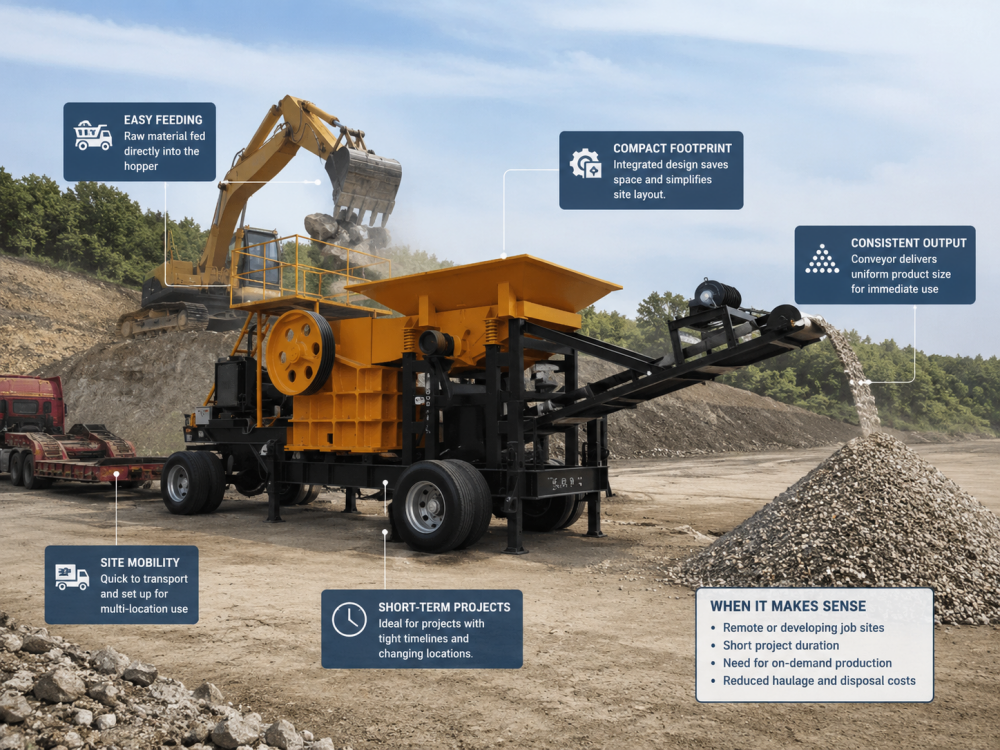
A buyer needs to process stone for several months at one location, then move to another area. A mobile jaw crusher or mobile crushing and screening setup may reduce installation time and improve flexibility.
The project moves along the road section. Moving the crusher near the material source can reduce transport distance and help produce road base material closer to the work site.
Ore or rock sources are spread across different points. A mobile crusher can help process material near each working area before further transport or processing.
Material comes from demolition work and may change by project. A mobile crusher can support temporary recycling and reduce the need to transport waste to a distant fixed plant.
A common mistake is comparing only the purchase price of mobile and stationary equipment.
A mobile crusher may save foundation work, installation time, and material transport in some projects. But it may also require transfer planning, fuel cost, support equipment, maintenance space, and careful operation.
A stationary plant may cost more to install at the beginning, but it can be more efficient for long term fixed production.
The real cost comparison should include project duration, material transport distance, foundation work, relocation demand, labor, power or fuel, maintenance, product requirement, and expected daily production.
A useful mobile crusher inquiry should start with project conditions.
First, explain the raw material type and maximum feed size. Then confirm the required capacity and final product size. After that, describe the site condition, road access, power or fuel availability, project duration, and whether the equipment needs to move between sites.
If screening is required, the buyer should also explain how many finished product sizes are needed.
This discussion helps the supplier judge whether a mobile jaw crusher, mobile impact crusher, mobile screening plant, or stationary crushing plant is more suitable.
A mobile crusher is valuable when it solves a real site problem.
It can help when the project is temporary, the material source changes, the site cannot support a fixed foundation, or material transport distance is too high. It may not be the best choice when the project is long term, fixed, high capacity, and requires a complex customized production line.
For buyers, the key question is not only whether a mobile crusher is convenient. The better question is whether mobility improves the whole project plan.
If you are comparing a mobile crusher with a stationary stone crusher plant, Sentai Machinery can help review your raw material, feed size, product target, site access, power condition, project duration, and relocation requirement.
Share your material photos or videos, required capacity, finished product size, site photos, and working plan. Our team can help recommend a suitable mobile or stationary crushing solution.
1. Limestone, Granite, or River Stone: How Raw Material Changes Crushing Process Design
2. A Practical Field Guide to Reducing Downtime in a Stone Crushing Plant
3. How Feed Size Affects the Performance of a Jaw Crusher
4. Why Does Jaw Crusher Discharge Size Become Unstable
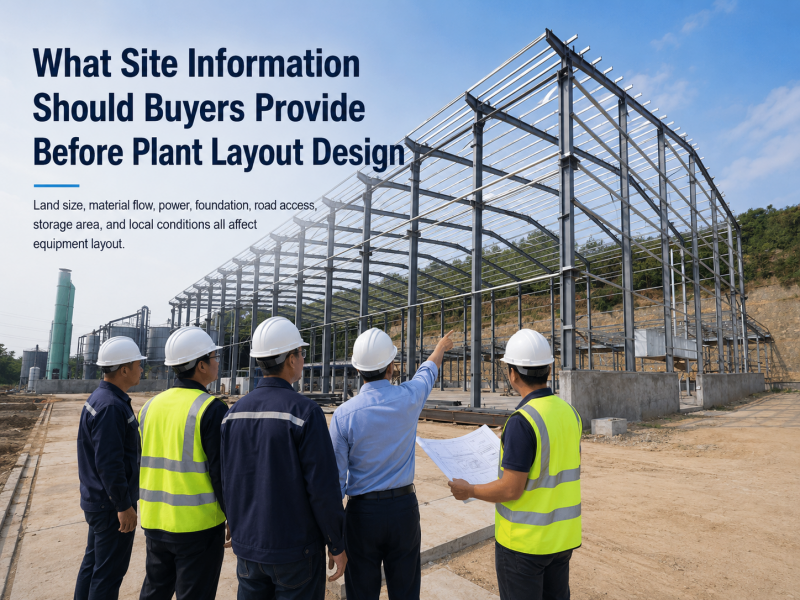
5. What Site Information Should Buyers Provide Before Plant Layout Design

 WhatsApp
 Email
Email
 +86 15538010601