
STCrushers Is A Professional Minging Equipment Manufacturer since 2004, Providing High Quality Crushers, Sand Making Machines, Drying Equipment and more.
STCrushers Is A Professional Minging Equipment Manufacturer since 2004, Providing High Quality Crushers, Sand Making Machines, Drying Equipment and more.
Two owners can bring the same gold ore sample and still need different grinding equipment. One plans a modest single-shift operation with limited power and a simple route into gravity recovery. The other expects continuous feed, controlled slurry, and later expansion. Their choice between a wet pan mill and a ball mill begins with the operating plan, required grinding result, and process after the mill, not the machine price alone.
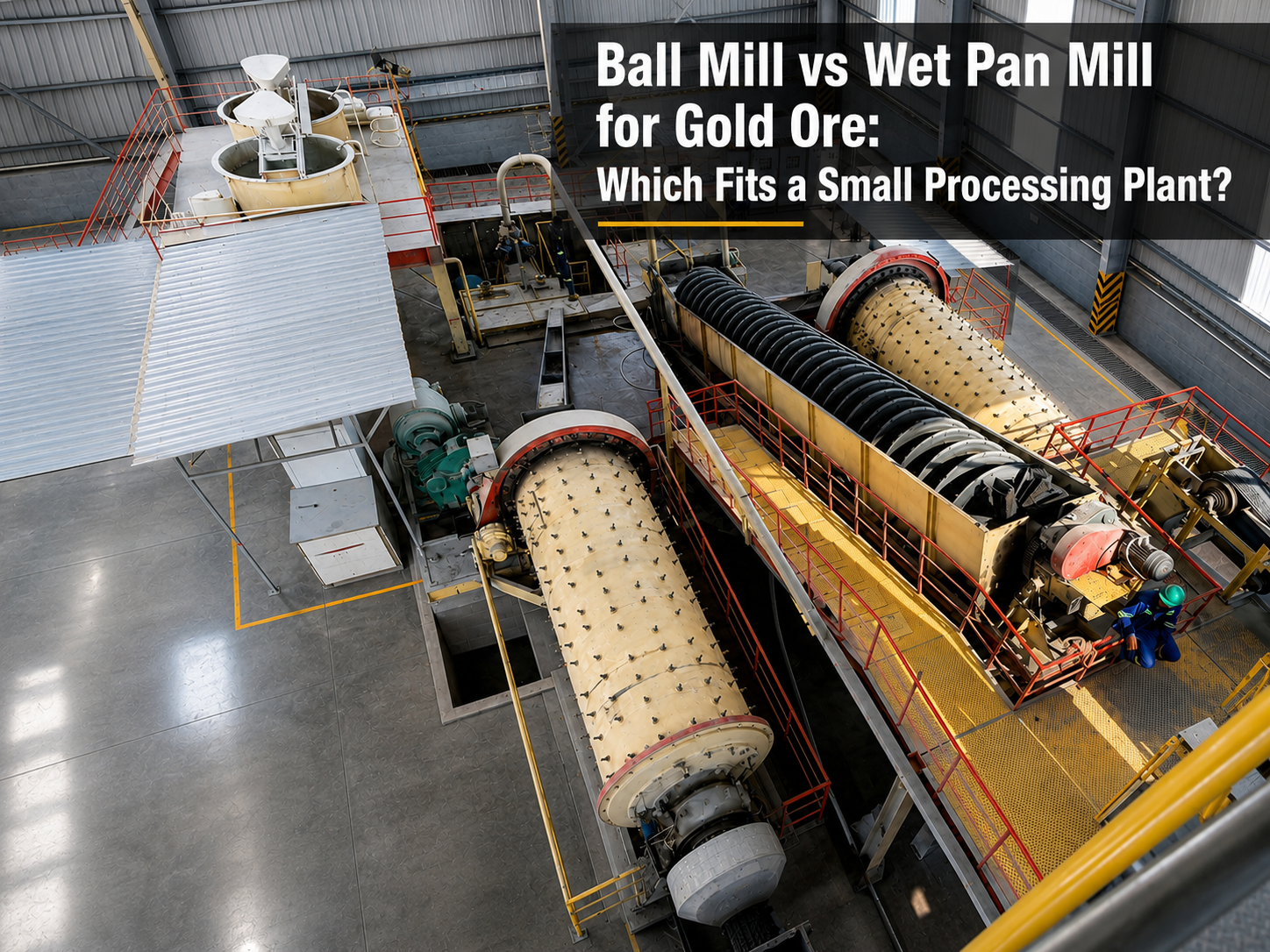
A wet pan mill uses heavy rollers to grind wet feed through repeated pressure and friction. Its relatively simple arrangement can suit operations with a limited production target and basic local maintenance. A ball mill uses grinding media inside a rotating cylinder and, in a wet plant, is commonly matched with classification, pumping, slurry control, and the following recovery stage. The wider system requires more planning but supports continuous operation and separation of qualified fines from coarse return.
Low purchase cost matters to a new mine, but it does not describe the cost of producing qualified ground material. A small owner-operated site may value simple installation and familiar mechanical maintenance. A plant supplying flotation or another continuous process may value steady feed, measurable circulating load, and repeatable overflow fineness. These are different operating models even when the stated tonnes per day look similar.
Decision factor | Wet pan mill setup | Ball mill and classification circuit |
Typical project position | Smaller or early-stage operation with a limited production target | Continuous plant requiring a defined grinding product |
System scope | Simpler grinding arrangement with fewer supporting units | Mill, classifier, pumps, slurry handling, controls, and return flow |
Capacity basis | Strongly influenced by operator practice, feed condition, and required fineness | Evaluated by fresh feed plus circulating load and qualified product output |
Fineness control | Requires close operating attention and verification by sampling | Classifier separates qualified fines and returns coarse material for more grinding |
Expansion path | Additional units may increase capacity but also duplicate labor and handling | Larger or parallel circuits can support planned plant expansion |
Site demand | Lower system complexity, but still needs controlled feed, water, power, and maintenance | Greater foundation, power, water, installation, and process-control requirements |
A wet pan mill deserves consideration when the project is genuinely small, crushed feed is controlled, operators can supervise grinding, and the downstream route does not require a large continuous slurry flow. Its actual output still changes with ore hardness, feed size, water, roller condition, operating practice, and required fineness. It cannot prove liberation or guarantee recovery, so selection must use testwork and a realistic production target rather than the label "small gold mine" alone.
A ball mill quotation can look like a single-machine purchase, but the process often needs more. As explained in What Buyers Often Miss When Matching a Ball Mill and Spiral Classifier, classification decides which particles move forward and which return. This defines qualified output but also creates circulating load, so classifier size, water balance, pumps, and return flow must match the mill. The added system becomes more valuable when continuous capacity and stable downstream feed are required.
Capacity may describe fresh feed, total internal throughput, or final material at the required fineness. These figures are not interchangeable. Harder ore, coarser feed, or a finer target can reduce qualified output. Classifier return occupies ball mill capacity, while wet pan material may need longer or repeated treatment. A fair comparison must use the same ore, feed size, target fineness, operating hours, and finished-output definition.
Gold ore should be ground enough to expose valuable minerals for the selected recovery process, not simply as fine as possible. Insufficient grinding leaves minerals locked; excessive grinding can create slimes and complicate separation. Ore testwork before beneficiation plant design should examine mineral association, liberation, and response to the intended recovery route. That result defines the grinding duty.
Gravity recovery may benefit from preserving recoverable coarse or free gold while achieving enough liberation. Flotation usually depends more strongly on stable slurry and a controlled particle-size range. Leaching also requires grinding that matches metallurgical test results. Gold Gravity Separation or Gold Flotation explains why the ore should decide the route. Equipment selection should not assume mercury amalgamation; worker safety, environmental controls, local rules, and safer tested processes must guide recovery decisions.
Neither machine should accept uncontrolled run-of-mine rock. Crushing should provide stable feed within the selected model's limit because oversize pieces consume grinding time and create load variation. The small gold ore processing plant guide connects crushing size with grinding cost for this reason. Feed preparation belongs in the comparison of both options.
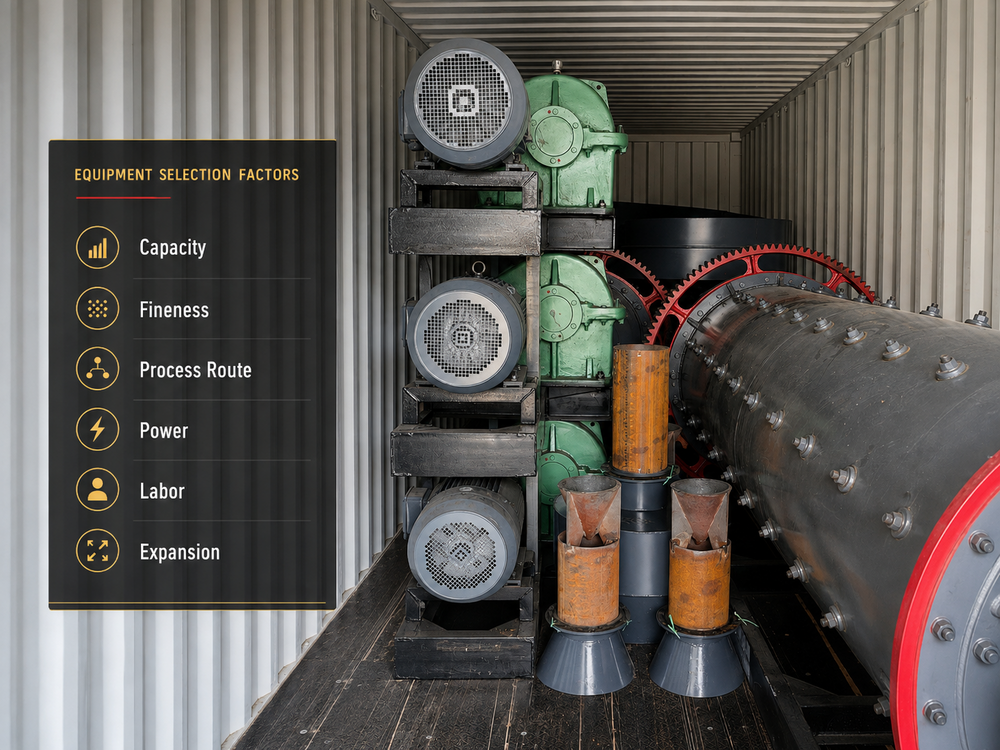
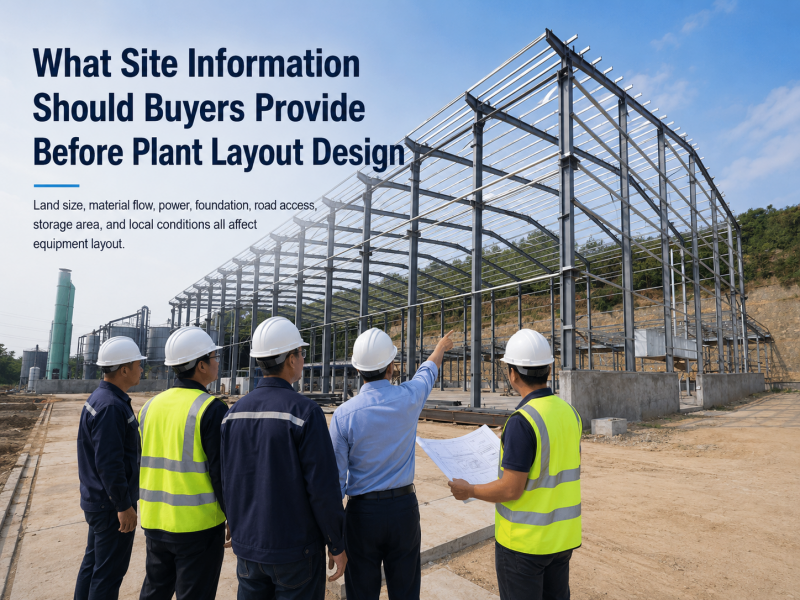
A remote site may have limited transformer capacity, unstable voltage, restricted water, or difficult lifting access. A ball mill circuit adds motors, pumps, classification, foundations, piping, and controls. A wet pan mill reduces some system complexity but still needs reliable power, water management, safe foundations, lubrication, and wear parts. Labor also matters: a simpler machine may need more direct attention, while a larger circuit needs personnel who understand classification and slurry control.
A wet pan mill can support an early project, yet its advantage may narrow when the mine needs higher qualified output, tighter fineness control, less handling, or steady feed to a continuous process. Adding small units can also multiply operators and variation. A ball mill circuit may then offer a more coherent expansion path. Compare cost per qualified tonne, labor, spares, downtime, power, water, and downstream stability, without relying on universal payback or energy-saving claims.
If testwork is incomplete, the recovery route is uncertain, or power and water are not ready, a complete ball mill circuit may freeze the project around assumptions that later change. A large system operating below its intended duty can tie up capital without improving recovery. Buyers should first confirm the points in What Buyers Should Confirm Before Choosing a Ball Mill for Ore Grinding.
Sentai Machinery should receive the ore type, assay and testwork, raw and crushed feed sizes, hourly or daily capacity, working hours, target fineness, and intended recovery method. Site voltage, available power, water, foundations, lifting access, labor, tailings, and expansion should also be stated. These inputs allow comparison of complete systems and may support a wet pan setup, a ball mill circuit, or a phased plan.
A wet pan mill and a ball mill support different production scales, process control, supporting equipment, and expansion paths. A wet pan mill may fit a genuinely small operation; a ball mill circuit may fit a plant needing controlled continuous output. The correct choice comes from ore testwork, qualified-product capacity, the recovery route, and the site's ability to operate the complete system.
If you are comparing a wet pan mill and a ball mill for gold ore, send Sentai Machinery your ore information, crushed feed size, planned capacity, target fineness, recovery method, power and water conditions, site layout, and expansion plan. Our team can review whether the project needs a simple first-stage grinding setup or a complete ball mill and classification circuit connected to a suitable beneficiation process.
What Buyers Should Know Before Choosing Equipment for a Small Gold Ore Processing Plant
What Buyers Should Confirm Before Choosing a Ball Mill for Ore Grinding
What Buyers Often Miss When Matching a Ball Mill and Spiral Classifier
Gold Gravity Separation or Gold Flotation: Which Process Fits Your Ore Better?
What Ore Test Work Is Needed Before Designing a Beneficiation Plant?
 WhatsApp
 Email
Email
 +86 15538010601